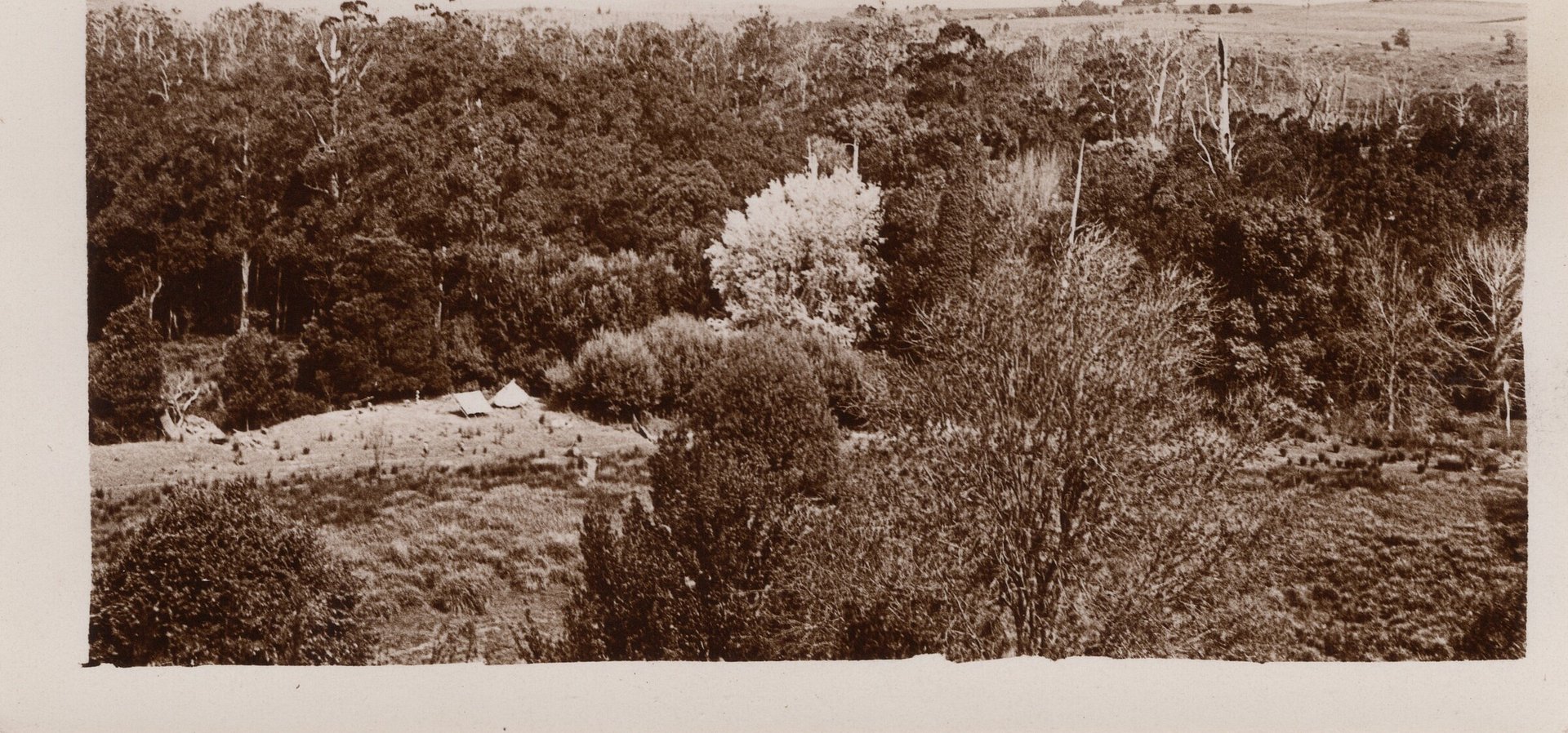
Mossvale Park pre 1850
In the beginning… it’s a great place to start our journey through time.
Up to the mid 1800’s the park was Gunaikurnai Brataualung country. The area that is the park is now classified as swampy riparian woodland with a little bit of damp rain forest on the slopes. Species of plants you would expect to find include Strzelecki gums and narrow leaf peppermints on the riverbanks with blackwood, swamp paperbark, woolly tea-tree, prickly tea-tree and prickly currant-bush as understory. Tall sedge, leafy flat-sedge, tall sword-sedge, tall rushes, kangaroo grass, wattle mat-rush, weeping grass and austral bracken would have grown on the wet boggy bits which would have been where the sound shell and lawn now is now. The boggy bit to the south of the lawn area is still regularly inundated and is often too wet to walk through. The damp forest would have contained blue gums, messmates with an understory that also contained along with the blackwoods and current bushes that are common to the woodland, hazel Pomaderris, musk daisy-bush snowy daisy-bush and hop goodenia. FIND OUT MORE
The first plantings of exotic trees were in the 1890's
The area of South Gippsland that includes what we now know of as Mossvale Park was first known as the Great Gippsland Forest. Some remnants of this remain in the park and are the subject of our Endemic Vegetation trail. But for this walk, we will be looking at the plantings in the park that occurred after Francis Moss settled on the 1000 acres virgin forest in 1888. The land had first been selected by Bernard Farrell ten years earlier. At this stage the property was called Mossmont on the Tarwin and was to be a plant nursery, like Moss’s home nursery in Buniyong, also called Mossmont.
The land was cleared by burning off which commenced in January. Then fencing, a hut and a bridge across the Tarwin River had to be built. By 1890 a house had been built for the nursery manager, Mr Bruce and Mr Moss when he visited.
The Mossmont nursery was up the hill to the west of the park. Surplus trees were planted on the river flats at the end of the tree growing season.
The Moss and Gould historical plant trail
The Moss and Gould trail showcases 14 species of tree planted in the period circa 1890-1900. The actual nursery was located on the top of the hill north of the current Mossvale Park. When the Edey family bought the Mossvale farm in 1930, Terence Edey emembered in his memoir ‘Moss Vale Days’ that the 30 acre nursery site was ‘a beautiful wilderness of untended roses, magnolias, rhododendrons, hawthorn, and assorted pines, fruit trees and exotic ornamentals. Some of these were trapped in the stunted profusion of old nursey rows, while others more fortunate had matured into magnificent specimens fit to grace a botanic garden’. We have also included Moss connected apples on the trail. Even though the plants are not very old they are clones of apple varieties that Moss either developed or popularised.
Use our Google map to follow the trail
The Google map is available for your phone, and you can easily follow the trail. Each numbered tree and point of interest is clickable with a photo and information attached. Otherwise use the brochure (either download and print the PDF file or use the flip book) and follow the trail using the photos to identify the historic trees. We have also provided QR codes to scan with your phone if you would like further information on any of the trees.

Contact the Friends of Mossvale Park using this form.
For all general Park inquiries and bookings please contact the Shire of South Gippsland on https://www.southgippsland.vic.gov.au/ContactUs